The Classification Problem
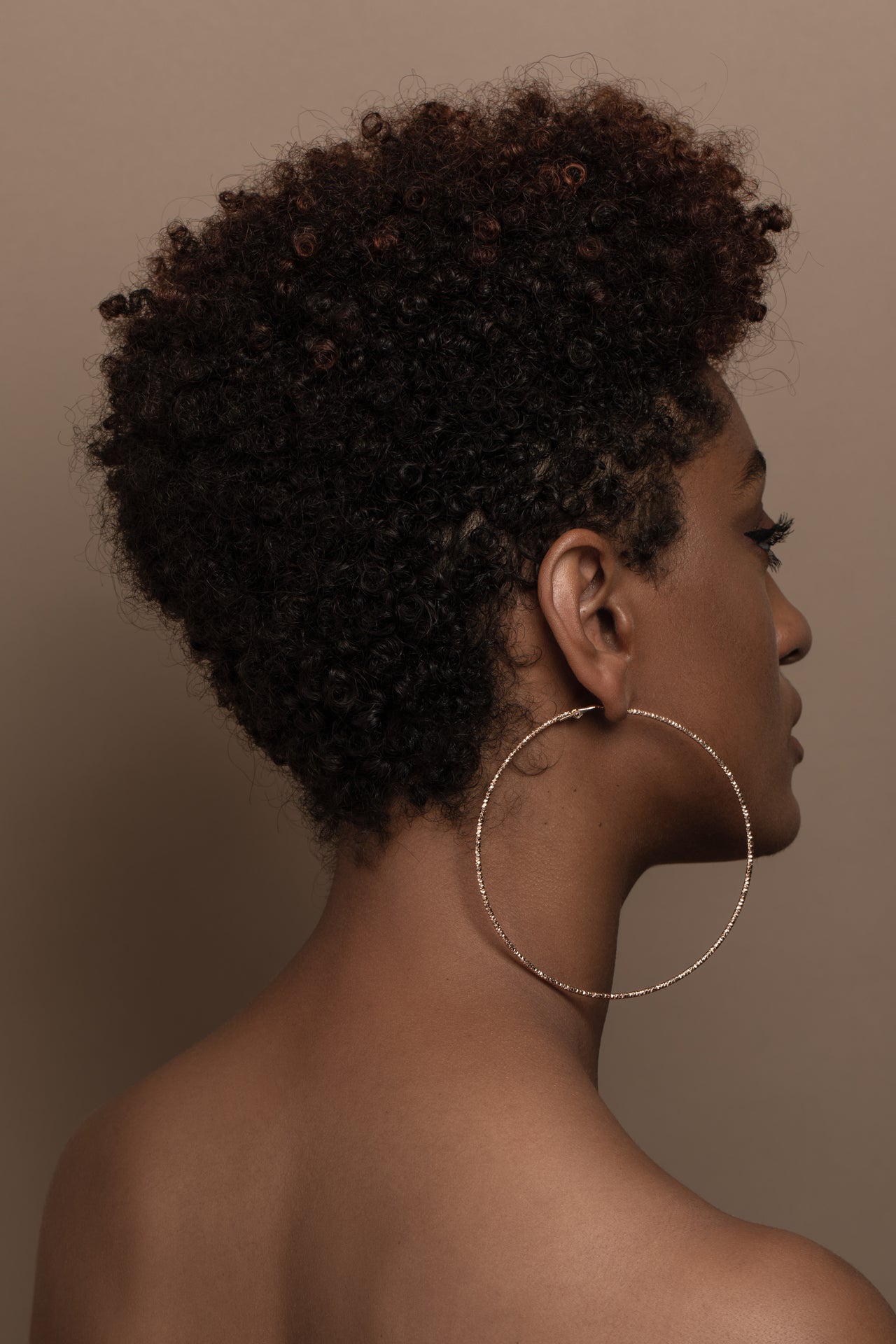
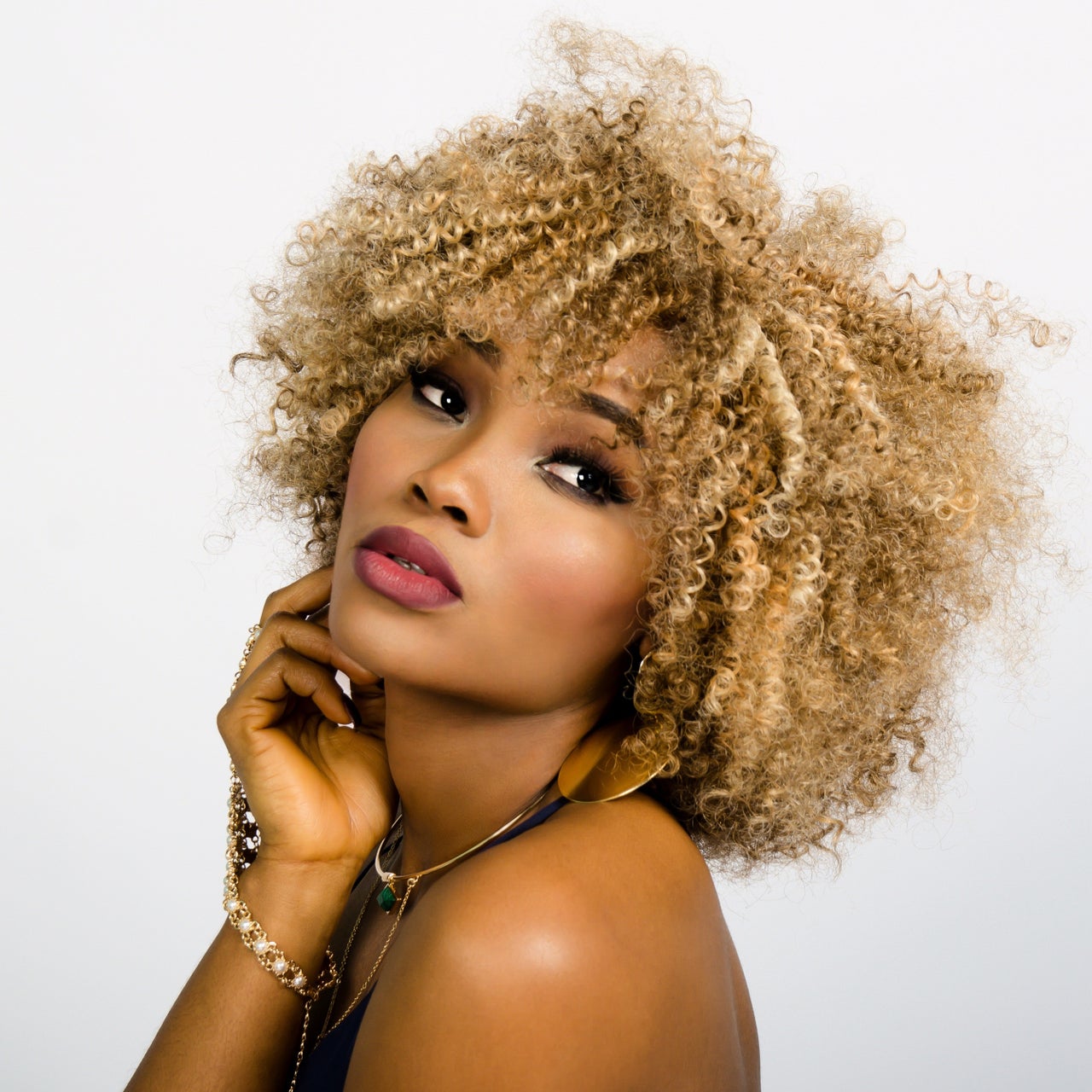
Ask anyone with textured hair to describe their hair type, and they will likely respond with a number-letter combination: “3B,” “4A,” “4C.” This is the Walker typing system — originally developed by Andre Walker for his 1997 book Andre Talks Hair — which classifies hair on a scale from Type 1 (straight) through Type 4 (coily/kinky), with subcategories A, B, and C indicating curl pattern tightness.
The Walker system has become the dominant framework for discussing hair types. It is ubiquitous in consumer hair care, natural hair communities, and social media. But it has a fundamental limitation: it was never designed for precision. It is a visual, subjective system that captures one dimension — apparent curl pattern — while ignoring the multiple structural, chemical, and physical properties that actually determine how hair behaves.
For CROWN’s mission — building measurement infrastructure that serves every hair type equitably — this imprecision is not merely inconvenient. It is an obstacle.
What the Walker System Captures
The Walker system classifies hair by visible curl pattern:
- Type 1: Straight (1A fine, 1B medium, 1C coarse)
- Type 2: Wavy (2A loose waves, 2B defined waves, 2C deep waves)
- Type 3: Curly (3A loose curls, 3B tight curls, 3C corkscrew curls)
- Type 4: Coily/Kinky (4A tight coils, 4B Z-pattern, 4C tight kinks with minimal definition)
This classification is useful as a general communication tool — “I have 3C hair” conveys a rough image. But it carries significant limitations.
What the Walker System Misses
Fibre diameter. One of the most important structural properties of hair is the diameter of individual fibres. Fibre diameter affects tensile strength, flexibility, product absorption, and breakage susceptibility. It varies enormously across individuals — from approximately 40 micrometres to over 120 micrometres — and does not correlate reliably with curl pattern. Two individuals classified as “4B” may have radically different fibre diameters, and therefore radically different hair care needs.
Cross-section shape. Hair fibres from different ethnic backgrounds differ in cross-sectional shape. European-type hair tends toward circular cross-sections, while African-type hair tends toward elliptical or flattened cross-sections. This structural difference affects how light reflects off the hair (and therefore its visual appearance), how it responds to moisture, and how vulnerable it is to breakage. The Walker system does not address cross-section geometry.
Porosity. Hair porosity — the ability of the hair shaft to absorb and retain moisture — is critical for understanding hair behaviour and care needs. High-porosity hair absorbs moisture quickly but loses it rapidly; low-porosity hair resists moisture penetration. Porosity is determined by cuticle condition and is independent of curl pattern. The Walker system ignores it entirely.
Density. The number of hair follicles per square centimetre of scalp varies among individuals and ethnic groups. Density affects volume, coverage, and styling options, but is not captured by the Walker system.
Chemical history. Whether hair has been chemically treated — relaxed, coloured, permed, keratin-treated — fundamentally alters its physical properties. Two samples classified as the same Walker type may behave entirely differently if one is virgin and the other chemically processed. The Walker system does not account for treatment history.
Protein integrity and hydration. The structural proteins (primarily keratin) and water content of hair determine its strength, elasticity, and overall health. These properties are not visible and are not captured by visual classification.
Washington State University’s Deep Hair Phenomics
The limitations of visual classification have prompted researchers to develop more rigorous approaches. Washington State University’s Deep Hair Phenomics study (2024), published in the Journal of Investigative Dermatology, represents a significant advance.
The WSU study used high-resolution imaging, mechanical testing, and chemical analysis to characterise hair across multiple dimensions simultaneously. Their findings confirmed that curl pattern alone explains only a fraction of hair diversity — fibre diameter, cross-section shape, mechanical properties, and chemical composition vary independently and provide much richer characterisation.
This research aligns with CROWN’s approach. The CROWN Hair DNA classification system captures 12+ dimensions of hair characteristics using the CROWN Diagnostic’s multi-sensor platform — including fibre diameter, cuticle condition, porosity, hydration, protein integrity, and chemical treatment history. This multi-dimensional approach replaces the subjective single-axis Walker classification with objective, sensor-verified characterisation.
Why Precision Matters for Equity
The imprecision of current classification systems is not merely a scientific inconvenience. It has equity implications.
First, the Walker system’s categories are unevenly detailed. Types 1 and 2 cover the majority of European and Asian hair types in six subcategories. Types 3 and 4 — which encompass the vast diversity of African, Caribbean, and mixed-heritage hair — also receive only six subcategories. This compression renders invisible the enormous variation within Afro-textured hair.
Second, the subjective nature of visual classification produces inconsistent results. Different observers classify the same hair differently. This inconsistency makes the system unsuitable for research, clinical assessment, or any context where reproducibility matters.
Third, the system reinforces the texturism hierarchy by positioning hair types on a numbered scale where “1” (straight) is the starting point. While this numbering may not have been intended as evaluative, the cultural context in which it operates inevitably associates lower numbers with proximity to the Eurocentric norm.
CROWN’s research programme requires measurement precision that the Walker system cannot provide. The CDI must correlate discrimination experiences with actual hair characteristics. The CROWN Hair Commons must contain data that is objective, reproducible, and dimensionally rich. And the diagnostic technology must classify hair in ways that are accurate across all ethnic backgrounds.
Toward Multi-Dimensional Classification
The future of hair classification lies in multi-dimensional, sensor-verified systems that capture the full complexity of human hair. CROWN’s contribution to this future is the CROWN Hair DNA system — a classification framework based on objective measurement of multiple hair properties, generated by the CROWN Diagnostic device and processed by the AI classification engine.
This approach does not replace the Walker system’s utility as a general communication tool. But it provides the precision needed for research, clinical assessment, diagnostic technology, and the evidence-based understanding of hair diversity that CROWN’s mission demands.
Understanding hair types is the starting point for understanding hair discrimination — because when measurement is imprecise, discrimination is invisible. CROWN is building the measurement infrastructure to change that.